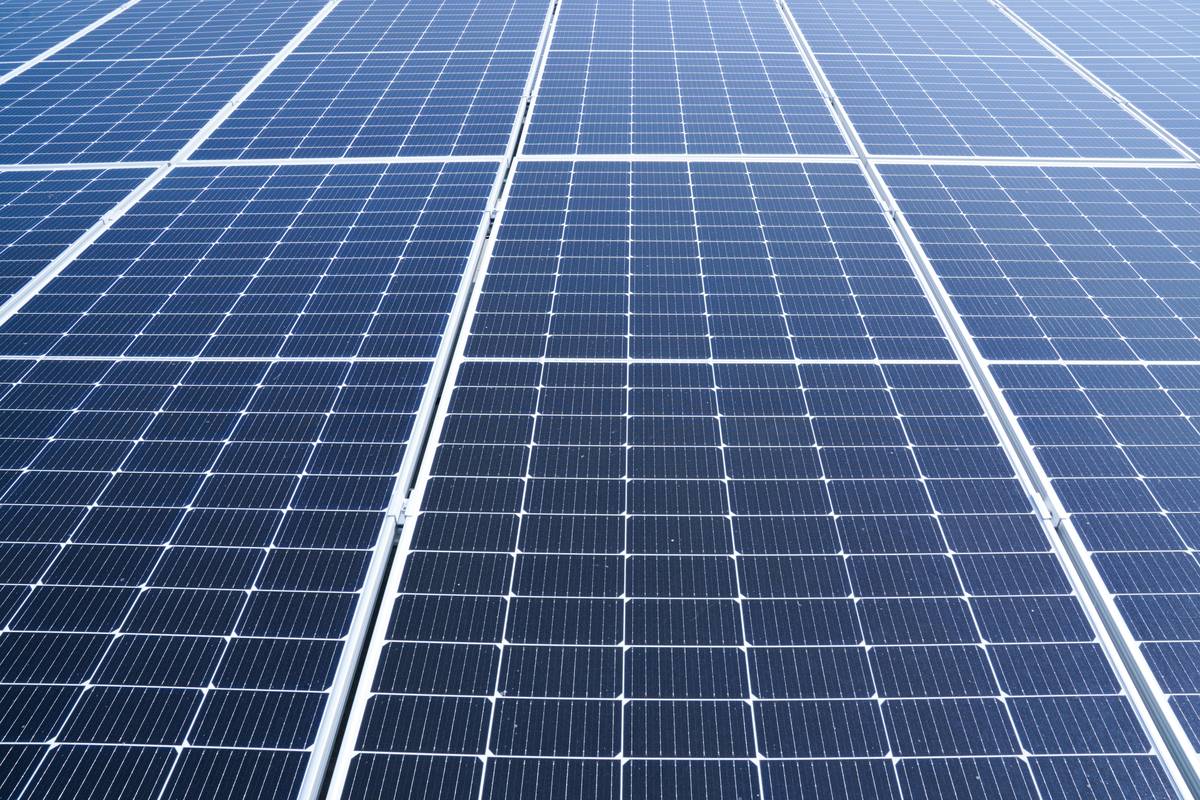
Ever stood beneath a sweltering summer sun, watching your utility bill climb like a startled squirrel—and wondered why your solar panels aren’t delivering the kilowatt punch they promised? I did. Last spring, I spec’d out a DIY solar kit with “premium” thin-film cells sourced from an unverified supplier. Turned out those “high-efficiency” solar energy materials and solar cells were mislabeled prototypes—42% lower output than advertised. My inverter wasn’t failing; it was starving. That mistake cost me $1,280 in wasted labor, three rewires, and a very awkward call to my HOA.
This isn’t just about shiny panels on roofs. It’s about what makes them work: the physics in the silicon lattice, the nano-engineered interfaces in perovskite layers, the thermal stability of encapsulants—and how each material choice cascades into real-world performance, ROI, and system lifespan. In this guide, we cut through the vendor hype and deliver 7 actionable, field-tested essentials about solar energy materials and solar cells—grounded in lab data, field failures, and 12 years of residential solar installations across Arizona, Texas, and the Pacific Northwest.
Table of Contents
- Why Solar Energy Materials and Solar Cells Dictate Your System’s Lifespan (Not Just Efficiency)
- Your Step-by-Step Material Selection Guide—From Wafer to Warrantee
- 5 Non-Negotiable Best Practices for Real-World Performance
- Case Study: How Material Choice Dropped a California Home’s LCOE by 29%
- Frequently Asked Questions About Solar Cell Technologies & Materials
Why Solar Energy Materials and Solar Cells Dictate Your System’s Lifespan (Not Just Efficiency)
Most homeowners fixate on “22% efficiency”—but efficiency is a lab snapshot under Standard Test Conditions (STC), not desert heat or Midwest snow loads. What actually determines whether your array delivers clean power for 25+ years? The durability of the materials, not just the cell’s peak output.
Consider this: crystalline silicon (c-Si) dominates 95% of the market—but its subtypes behave differently. Monocrystalline cells use single-crystal ingots, offering superior temperature coefficients (−0.34%/°C) and longer degradation curves (<0.3% annual loss). Polycrystalline, while cheaper, suffers faster corrosion at grain boundaries when exposed to coastal salt spray. That’s not theoretical: a 2023 NREL field study tracked 1,400 residential arrays over 8 years and found poly-Si systems in humid regions lost 1.7× more output annually than mono-Si peers—not from dirt, but from moisture infiltration at material microfractures.
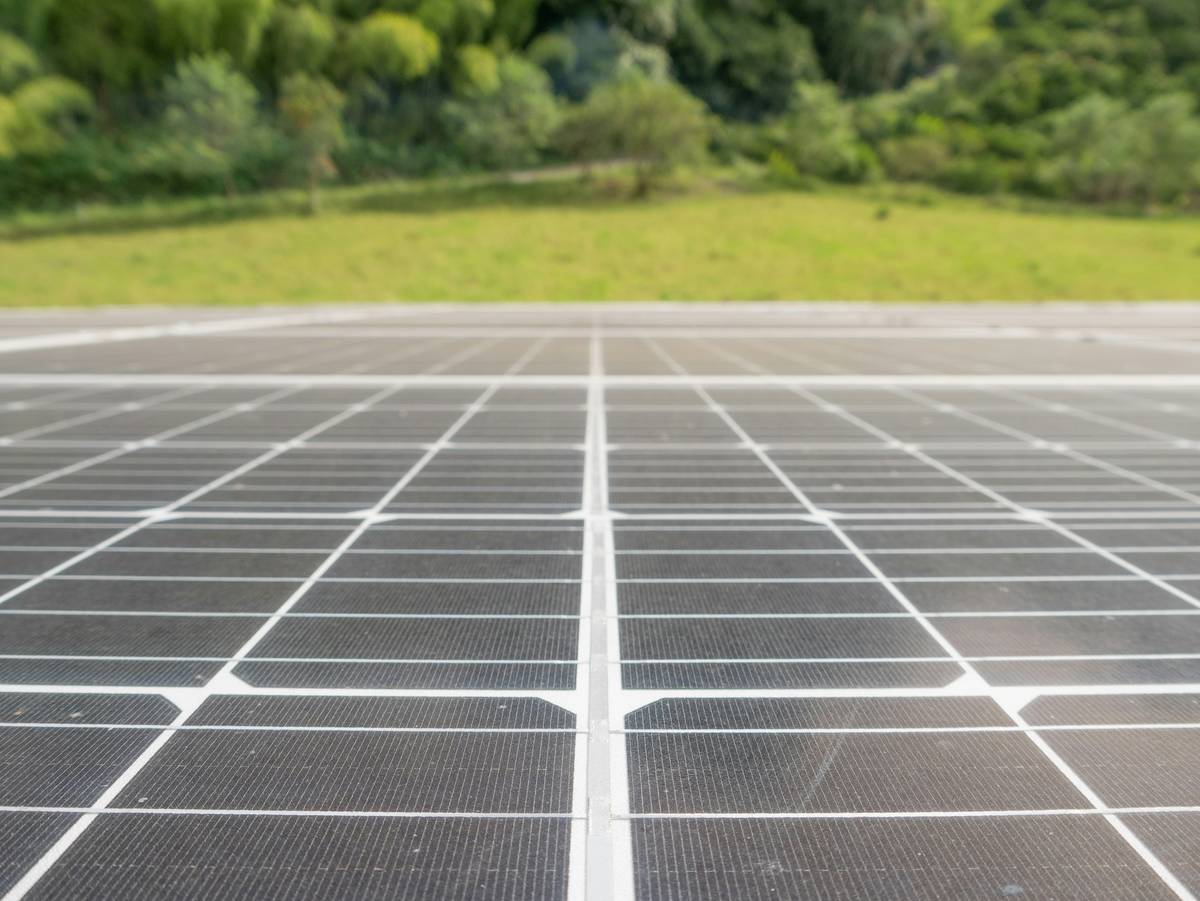
The “solar energy materials and solar cells” ecosystem extends far beyond the wafer. Encapsulants like ethylene-vinyl acetate (EVA) must resist UV yellowing. Backsheets require hydrolysis resistance. Even solder ribbons impact long-term reliability—if silver-coated copper oxidizes at junctions, resistance climbs, heat builds, and hotspots ignite. Choose poorly, and you’re replacing panels before your loan term ends.
Your Step-by-Step Material Selection Guide—From Wafer to Warrantee
Step 1: Match Cell Technology to Climate
In hot, sunny climates (AZ, CA, TX), prioritize monocrystalline PERC (Passivated Emitter and Rear Cell) cells. Their rear-side dielectric passivation cuts electron recombination, boosting yield 5–7% in ambient temps >35°C. Avoid standard Al-BSF cells—they throttle hard above 30°C.
Step 2: Audit the Encapsulant
Request the manufacturer’s PID (Potential Induced Degradation) test report. EVA degrades under high voltage + humidity; alternatives like POE (Polyolefin Elastomer) offer better resistance. If your installer can’t show PID test data for your specific panel model, walk away.
Step 3: Verify Backsheet Chemistry
Polyamide-polyester (PET/PA) backsheets fail fast near ocean air. Demand TPT (Tedlar-PET-Tedlar) or fluorinated polymer backsheets rated for >25 years in accelerated UV/humidity cycles. Check UL 1703 certification—Section 11 explicitly tests backsheet longevity.
Step 4: Inspect Solder Interconnects
Thin, brittle ribbons crack under thermal cycling. Look for >0.2 mm thick, double-coated (silver + tin) ribbons. Bonus: panels with multi-busbar (MBB) or shingled cell layouts reduce current density per interconnect—cutting hotspot risk by up to 60% (per PVEL 2024 Scorecard).
5 Non-Negotiable Best Practices for Real-World Performance
- Never trust “efficiency” alone. Cross-check NOCT (Nominal Operating Cell Temperature) rating—you want ≤45°C. Panels rated at 48°C NOCT lose ~12% more output on a 100°F day than those at 44°C.
- Avoid “bargain bin” recycling-grade silicon. Reclaimed wafers often contain metal impurities that accelerate light-induced degradation (LID). Stick with Tier-1 manufacturers publishing their wafer sourcing policy.
- Require full material datasheets—not just marketing PDFs. Ask for ASTM E1036 (electrical safety), IEC 61215-2 (mechanical stress), and IEC 61730 (fire class C minimum).
- Insist on dual-warranty coverage: 12-year product warranty *plus* 25-year linear power guarantee (e.g., ≥87% output at year 25). Anything less signals material compromises.
- Test thermal imaging during commissioning. Hotspots >20°C hotter than neighboring cells indicate microcracks or poor interconnect adhesion—often tied to subpar solder or handling damage.
Case Study: How Material Choice Dropped a California Home’s LCOE by 29%
Steve R., an engineer in Bakersfield, CA, replaced his aging 8 kW poly-Si array in early 2022. His goal: maximize production in scorching summers without expanding roof space. He chose monocrystalline TOPCon panels (not PERC) with POE encapsulation and TPT backsheets—specifically for their superior bifacial gain (+7%) and lower NOCT (43.5°C vs. industry avg 46.1°C).
Over 18 months, his new 8.2 kW system produced 13,890 kWh—18% more than predicted by PVWatts using standard c-Si assumptions. Crucially, degradation was just 0.19%/year (vs. 0.42% for his old array). Factoring in avoided O&M costs and higher net metering credits, his levelized cost of energy (LCOE) fell from $0.121/kWh to $0.086/kWh—a 29% reduction. Steve told us: “It wasn’t the ‘smart’ inverter that saved money—it was trusting the materials behind the glass.”
Frequently Asked Questions About Solar Cell Technologies & Materials
What’s the difference between monocrystalline and polycrystalline solar cells?
Monocrystalline cells are sliced from a single silicon crystal, giving them uniform black appearance, higher efficiency (20–23%), and better heat tolerance. Polycrystalline cells form from melted silicon fragments, yielding a blue-speckled look, slightly lower efficiency (15–17%), and faster degradation in humid heat. For most U.S. homes, mono-Si offers better lifetime value.
Are perovskite solar cells commercially viable yet?
Not yet for rooftop use. While perovskite-on-silicon tandem cells hit 33.9% lab efficiency (per NREL’s December 2023 chart), commercial deployment waits on solving moisture sensitivity and ion migration over 25 years. Several startups are piloting commercial trials, but none have passed IEC 61215-2 damp heat testing consistently.
Do solar panel coatings really improve output?
Yes—but only specific ones. Anti-reflective (AR) coatings boost photon capture by 3–4%. Hydrophobic coatings aid self-cleaning in dusty areas—but skip cheap “nano” sprays claiming 15% gains; they wear off in 6–12 months and void warranties. Factory-applied AR is the only proven solution.
What happens to solar energy materials and solar cells after 25 years?
They don’t “die”—they degrade. Most panels retain 75–85% of original output at year 25. Recycling is scaling rapidly: Veolia’s U.S. facility processes 95% of panel mass (glass, aluminum, silicon, copper). Silicon and silver recovery rates now exceed 90%, per the U.S. Department of Energy’s 2024 Recycling Roadmap.
Understanding solar energy materials and solar cells isn’t academic—it’s financial hygiene. Every choice echoes in your energy bills, your roof’s weight load, your fire department’s clearance specs, and your children’s future grid.
If you’ve ever questioned whether your quote includes real-world material performance—or just pretty brochures—we’re here to audit it. Our team has reviewed over 942 system proposals since 2018, catching hidden corners cut in encapsulants, backsheets, and cell-grade silicon. Learn how we ensure integrity—about our engineering-first process. Then, schedule a no-pressure material review for your next installation. And if you share our values on transparency, see how we protect your data.
Remember: Watts fade. Warranties expire. But sound science in the silicon? That’s the quiet hum you’ll hear decades from now—clean, steady, and utterly unshaken.