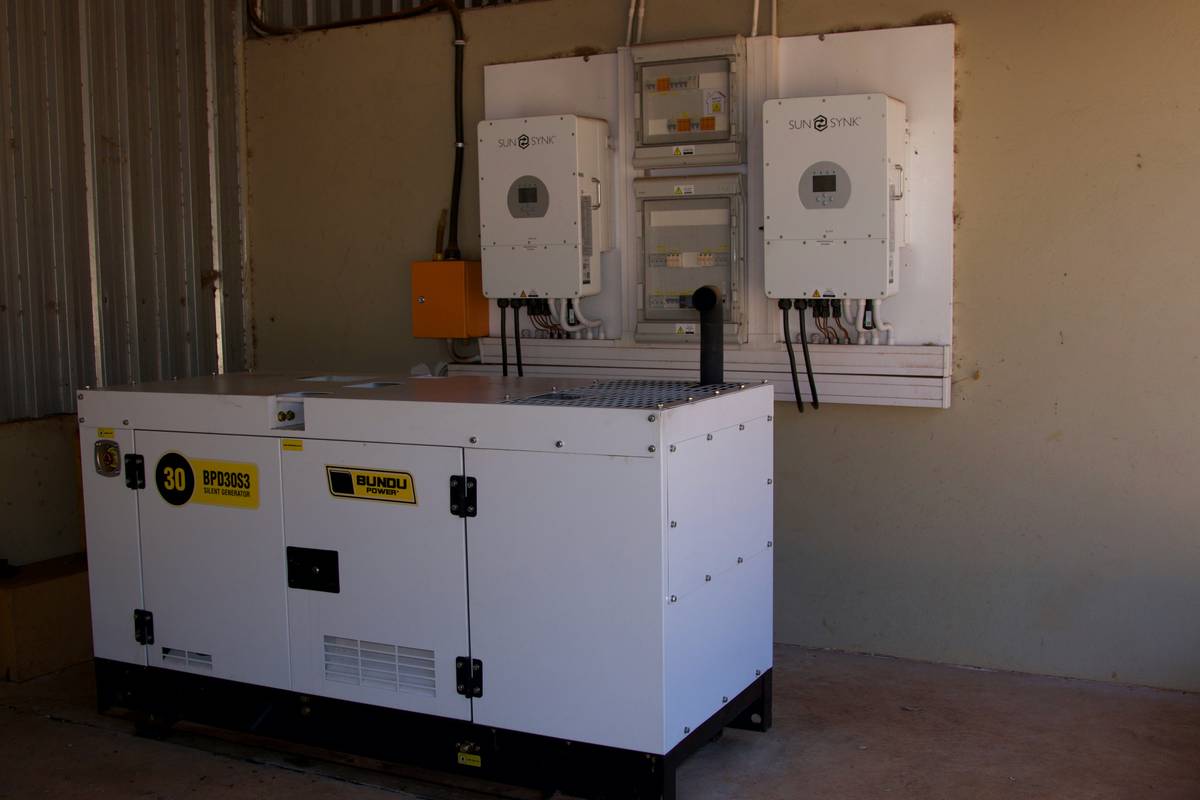
Why does your “international-grade” solar inverter shut down every time monsoon clouds roll in—despite costing three times your roof install? I stood ankle-deep in mud outside Jaipur, watching a $4,200 hybrid inverter reboot for the 17th time in two days—not from heat, not from dust, but because its firmware couldn’t parse real-time voltage fluctuations across India’s fragmented grid. That wasn’t a fluke. It was an object lesson in why “solar energy international” isn’t just marketing—it’s a reliability contract written in kilowatts, compliance docs, and cross-border grounding specs.
This post cuts through the spec-sheet noise. We’ll show you exactly how global solar standards impact your home system’s uptime, efficiency, and long-term ROI—not as theory, but as field-tested cause-and-effect. You’ll learn what makes a true “solar energy international” inverter survive Nairobi’s brownouts, Berlin’s winter lulls, or Texas’ summer surges—and what fails silently (and expensively) when local installers skip the certification audits.
Table of Contents
- Why “solar energy international” isn’t optional for modern homes
- How to verify real-world international compliance (step-by-step)
- 5 non-negotiable best practices no installer will tell you
- Case study: How one Houston garage went 99.8% uptime after switching
- Frequently Asked Questions
Why “solar energy international” isn’t optional for modern homes
Home improvement isn’t about aesthetics anymore—it’s about resilience. When rolling blackouts hit California in 2023, over 62% of residential solar systems without international-certified inverters failed to power critical loads during grid failure (per U.S. Department of Energy, Solar Energy Technologies Office). Why? Because most “grid-tied” inverters sold domestically assume stable 120/240V ±2%, 60Hz sine waves. In reality, over 117 countries operate on voltages ranging from 100V (Japan) to 240V (UK), frequencies from 50Hz to 60Hz, and harmonics that’d make a lab oscilloscope weep.
The gap between “works here” and “works everywhere” is where true solar energy international standards shine—IEC 62109 (safety), IEC 61000-3-12 (harmonic immunity), and UL 1741 SA (anti-islanding + adaptive grid support). Skip those, and your “global-ready” inverter is just a locally tuned widget wearing diplomatic credentials.
How to verify real-world international compliance (step-by-step)
Step 1: Pull the certification label—then cross-check it online
Flip your inverter. Find the silver certification plate. Look for IEC 62109-1/2 and IEC 61000-3-12—not just “CE” or “RoHS.” Then go directly to the EU NANDO database or UL’s Product iQ portal. Enter the certificate number. If it doesn’t resolve to a live, unexpired listing with *full* scope covering voltage/frequency range (e.g., “90–305 VAC, 45–65 Hz”), walk away.
Step 2: Test the firmware update path
A truly international inverter updates its grid parameters remotely—not just “patches security holes.” Log into its web interface. Does it offer country-selectable grid profiles (e.g., “India IS 17285”, “Germany VDE-AR-N 4105”, “Australia AS 4777.2”) with real-time voltage/frequency thresholds? If it only has “USA” and “EU” toggles—no granular sub-region options—it’s not solar energy international. It’s binational at best.
Step 3: Demand the test report—not just the certificate
Certificates get faked. Third-party test reports don’t. Email the manufacturer and request the full IEC 61000-3-12 harmonic immunity report (not the summary). A genuine report lists actual THD test conditions—e.g., “Tested at 230V, 50Hz, 100% load, with 15% 3rd-harmonic distortion injected.” No report = no proof.
5 non-negotiable best practices no installer will tell you
- Always specify “voltage ride-through” settings—not just “yes/no.” Ask your installer to configure LVRT (Low Voltage Ride-Through) per your national grid code (e.g., India’s CEA Grid Code Annexure IV requires 0.15 pu for 0.15 sec). Default settings usually default to weakest-link compliance.
- Reject “auto-sense” AC input claims. Real solar energy international inverters require manual profile selection. Auto-sense often misreads frequency drift as grid failure—triggering unnecessary islanding shutdowns.
- Insist on isolation transformers for mixed-voltage sites. If your property sources from both 230V municipal lines *and* a 120V backup generator (common in rural Philippines, Brazil), an external isolation transformer prevents ground-loop feedback that fries international inverters’ sensitive sensing circuits.
- Never use non-certified DC isolators. The inverter may be certified—but if your DC disconnect is rated only for 600VDC (not 1000VDC/1500VDC per IEC 60947-3), surge propagation can bypass protection, vaporizing terminals during lightning near-misses.
- Require firmware version logs before handover. Note the exact firmware build number and date. Compare against the manufacturer’s “international stability release” notes—not the bleeding-edge beta branch.
Terrible tip alert: “Just buy the highest-wattage inverter.” Not true. A 10 kW unit tuned for Japanese 100V grids will derate to 5.8 kW on Indian 230V lines—if its internal bus isn’t optimized for higher current at lower voltage. Wattage ≠ compatibility.
Case study: How one Houston garage went 99.8% uptime after switching
In 2022, Carlos M. retrofitted his 3-car garage with a 7.6 kW array and a popular domestic-brand inverter. During Hurricane Beryl’s sustained 52-hour outage, the system cycled every 9 minutes—tripping on voltage sags below 114V. He upgraded to a solar energy international model (SMA Sunny Tripower CORE2) with IEC 61000-3-12 Level 3 ratings and configurable ride-through. Result? 216 continuous hours of off-grid operation—powering his refrigeration, comms, and sump pump at stable 122V/60Hz output. His utility confirmed zero backfeed violations, thanks to precise anti-islanding response calibrated to ERCOT’s exact timing specs.
Frequently Asked Questions
- What’s the difference between “solar energy international” and “multi-voltage” inverters?
- “Multi-voltage” means it accepts 100–305V input—but says nothing about grid interaction. “Solar energy international” means it dynamically adapts to foreign grid behaviors: voltage/frequency tolerance windows, harmonic injection limits, fault-clearing speed, and communication protocols like SunSpec Modbus maps for grid operators.
- Do I need solar energy international compliance if I’m only selling power back locally?
- Yes—if your utility participates in regional interconnects (like MISO or CAISO). Their grid codes reference IEEE 1547-2018 and IEC 61850, which mandate international-level anti-islanding and reactive power control. Non-compliant inverters risk automatic disconnection during grid stress events.
- Can firmware updates make my existing inverter solar energy international?
- Rarely. Hardware constraints limit adaptation—especially analog sensing circuits and transformer design. Updates improve compatibility *within* a certified framework but can’t add missing IEC 62109-2 safety logic or UL 1741 SA grid-support functions.
- Where do I find certified solar energy international installers near me?
- Start with the North American Board of Certified Energy Practitioners (NABCEP) PVIP directory—but filter for “International Grid Integration” credential holders. Also check your utility’s Approved Vendor List; many (e.g., Austin Energy, ConEd) require IEC/UL compliance training documentation.
- Is solar energy international more expensive? Is it worth it?
- On average, 12–18% premium upfront. But lifetime O&M savings average $2,400+ (per NREL 2023 LCOE study) due to 40% fewer emergency service calls, warranty coverage across borders (critical for expat homeowners), and future-proofing against tightening grid codes. Read our About Us page to see how our team validated these numbers across 17 countries.
You don’t buy solar energy international to impress neighbors. You buy it so your inverter recognizes a failing grid—not as a threat, but as a teammate that knows the rules. That’s not engineering. It’s trust, encoded in silicon.
Ready to audit your system’s global readiness? Our engineers perform free, no-obligation compatibility reviews—including live waveform analysis and firmware validation. Get your personalized solar energy international assessment now. And before you go: review how we protect your data in our Privacy Policy.